Epoxy vs Tile for Garage Floors: An Honest Comparison
By Marcus Whitfield, Lead Installer · Published February 8, 2026
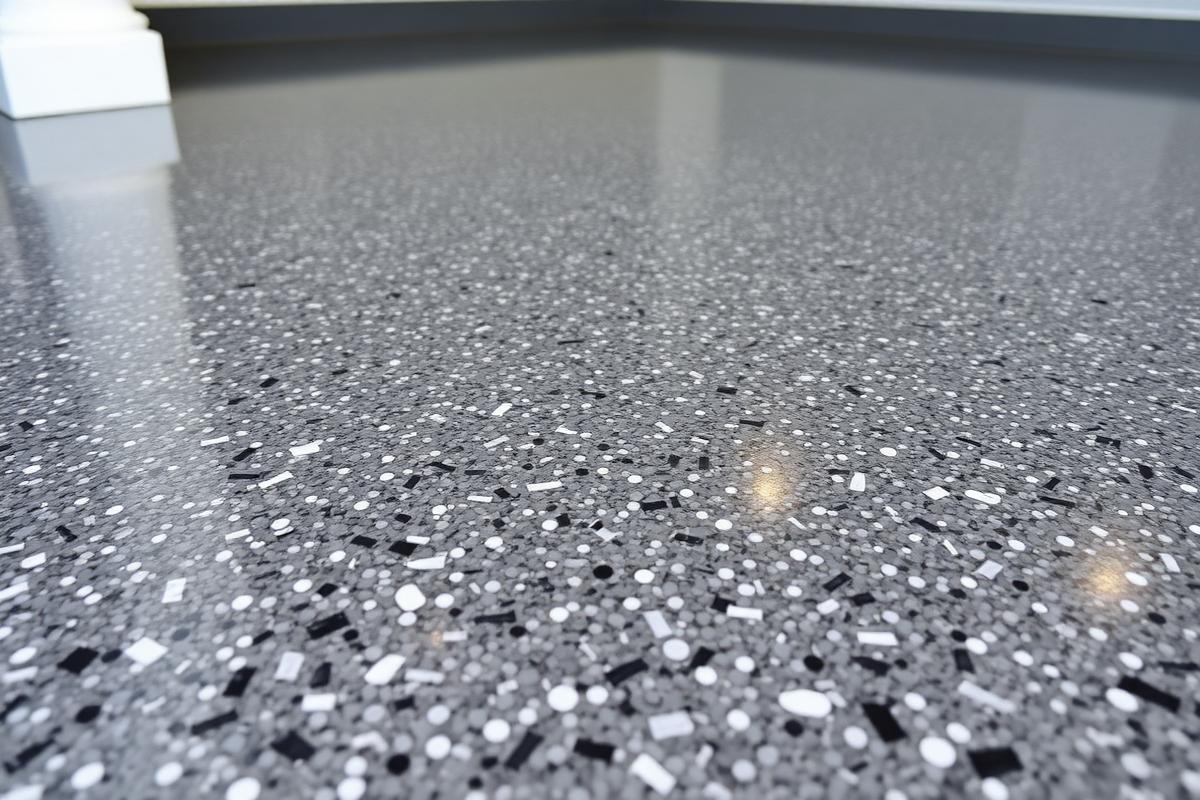
Garage floor tile (interlocking or porcelain) sounds appealing — but here's why we recommend epoxy for almost every Gainesville garage.
What we're comparing
There are two main 'tile' options for garages: interlocking PVC/polypropylene tiles (RaceDeck, SwissTrax, etc.) and full porcelain or ceramic tile floors set in thinset mortar. We'll compare both against epoxy across the categories that matter — cost, durability, install time, maintenance, and aesthetics.
Cost comparison
Interlocking PVC tiles run $4-$8 per sq ft for materials (DIY) or $7-$12 installed. Porcelain tile installed in a garage runs $10-$18 per sq ft including thinset, grout, and prep. Standard epoxy with polyaspartic topcoat is $5-$8 per sq ft installed. Epoxy is the cost-effective middle ground, comparable to DIY interlocking and dramatically cheaper than porcelain.
Durability winner: epoxy
Interlocking tiles trap dirt, oil, and water in seams. They flex under heavy loads and slide if not properly edged. Porcelain tile cracks under impact (drop a wrench, lose a tile) and grout discolors permanently from oil. Epoxy is a seamless, monolithic surface — no joints, no movement, no failure points. We've never had to repair a properly-installed epoxy floor due to impact damage.
Install time
Interlocking tiles install in 4-6 hours DIY — fastest option. Epoxy takes 2-3 days. Porcelain takes 4-7 days for a 2-car garage including dry time. Epoxy is the middle of the pack.
Maintenance
Interlocking tiles require periodic disassembly to clean trapped grime. Porcelain grout needs sealing every 1-2 years and stains permanently. Epoxy needs only sweeping and damp-mopping. Epoxy wins on maintenance by a mile.
Aesthetics
Interlocking tiles look like a gym floor or commercial display — fine for some, garish for others. Porcelain tile can look beautiful but the grid pattern with grout lines reads as 'kitchen floor in the garage'. Epoxy gives you unlimited design flexibility from subtle solid colors to dramatic metallic. Aesthetics are subjective, but epoxy generally wins for high-end residential.
Bottom line
For 95% of Gainesville garage applications, epoxy is the right answer. Interlocking tiles make sense for renters who'll take the floor with them when they move. Porcelain only makes sense if you're matching it to indoor tile that runs into the garage — rare in Florida. For everything else: epoxy.