Epoxy Flooring in High Humidity: The Florida Installer's Guide
By Marcus Whitfield, Lead Installer · Published February 22, 2026
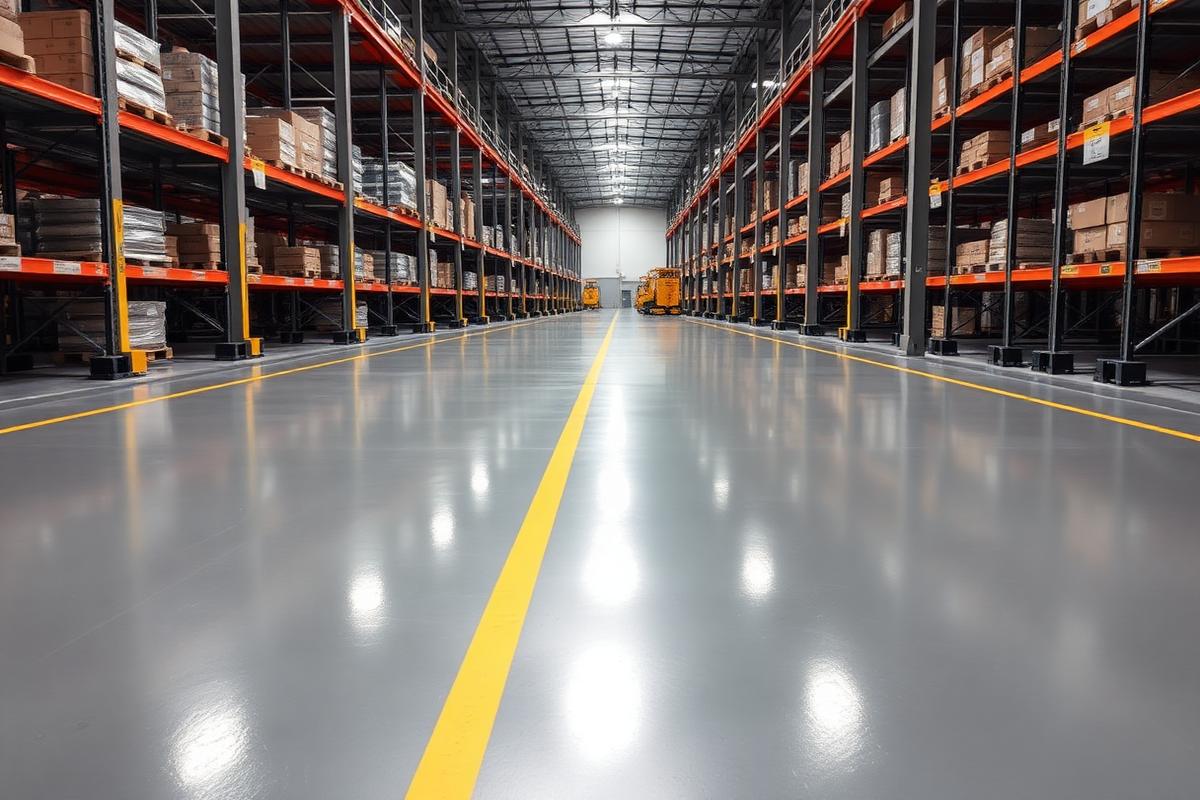
Florida concrete is wet concrete. Here's why that destroys most epoxy floors — and what we do differently.
The hidden problem: vapor pressure
Every concrete slab in Florida is constantly pushing moisture vapor upward. It's called moisture vapor emission rate (MVER) and it's measured in pounds of water per 1,000 square feet per 24 hours. A dry Arizona slab might emit 1-2 lbs. A typical Gainesville slab emits 8-15 lbs, sometimes higher. When you coat a wet slab with non-breathable epoxy, the vapor has nowhere to go and builds osmotic pressure under the coating until it pops the coating off in white blisters.
Why home-store epoxy fails in Florida
Rust-Oleum, Quikrete, and similar home-store epoxy kits are formulated for low-humidity national average conditions. They have no moisture mitigation capability whatsoever. In Phoenix or Denver they last years. In Gainesville they fail within 12-18 months — sometimes during the first hot, humid August. We re-coat 20-30 of these failed home-store jobs every single year.
How professionals handle Florida moisture
Three steps every legitimate Florida epoxy contractor should follow. First, test moisture vapor emission using ASTM F1869 (calcium chloride dishes left on the slab for 72 hours) or ASTM F2170 (relative humidity probes inserted into the slab). Second, spec a moisture-mitigation epoxy primer rated for the measured MVER — typically a 100%-solids epoxy with vapor-blocking additives, rated for 12, 18, or 25-lb emission. Third, apply at the correct thickness (minimum 12 mils) and allow proper recoat windows so the primer fully crosslinks before the basecoat goes down.
Signs your contractor is skipping moisture mitigation
Red flag phrases: 'we use a special epoxy that doesn't need primer', 'one-day install no prep', 'we acid-etch instead of grinding'. None of these address moisture. Real moisture mitigation requires diamond grinding (acid etching does not open the slab profile correctly), proper testing (taking 5 minutes to set out moisture dishes is a small but mandatory step), and the right primer chemistry. If your contractor doesn't talk about any of this, they're going to install a floor that fails.
What proper installation looks like
On a Gainesville install, we arrive day one, set out calcium chloride dishes in 3-4 spots across the slab, and let them sit while we begin diamond grinding. By the time grinding is complete, we have moisture readings. We spec primer accordingly: 12-lb primer for most residential garages, 18-lb for basements and ground-floor commercial, 25-lb for the wettest spaces. Primer goes down day one afternoon, cures overnight, basecoat goes day two morning. This adds maybe 90 minutes to the project — and it's the difference between a 20-year floor and a 20-month floor.
Inheriting a failed floor
If you have a peeling, blistering, or white-spotting epoxy floor in your Gainesville home — don't try to patch it. We'll diamond-grind the entire failed coating off, test moisture, spec the right primer, and install a real system. Cost is comparable to a new install plus removal labor. We re-do 2-3 failed home-store floors every month and the difference in result is night and day.